
Cosmetic Risk
0.5" · Pea size
Rarely causes meaningful damage on newer roofs. Older or worn shingles may see minor granule loss.
Hail Damage Specialists · KC Metro
Kansas City sits in the heart of Hail Alley. After any significant hail event, get a professional inspection — most hail damage is invisible from the ground but devastating over time.
The Kansas City metro sits at the intersection of warm, moist air from the Gulf of Mexico and cold, dry air pushing down from Canada — the exact atmospheric conditions that generate severe thunderstorms and large hail. The region consistently ranks among the highest in the country for hail frequency, hail size, and resulting property damage.
Hail season in Kansas City peaks from April through June, though damaging hail events occur from March through September. In recent years, the metro area has been struck by multiple large-hail events annually. Golf ball-sized hail (1.75 inches) is not rare here — it's a regular feature of KC springs.
What makes hail so costly isn't always the catastrophic, obvious damage. It's the quiet, cumulative destruction that plays out over 3–5 years after a hail event — granules stripped from shingles, UV protection eliminated, premature roofing failure. Homeowners who never get an inspection after a storm often discover their roof has been quietly failing for years by the time they notice water damage inside.
After any hail event: Call Tucci Roofing Co. for a free estimate within days of the storm. Insurance claim documentation is strongest when linked to a specific storm date. Waiting months weakens your position with the insurer.
Anchor Exteriors were very easy to communicate with, quick to assess our issue, and honest and forward with pricing and the work they needed to do. I would gladly use them again and recommend them to anyone else!
Anchor Exteriors is an amazing roofing company. I know nothing about roofing and they took care of everything for me. Owen is a very knowledgeable person and even met with the insurance adjuster to explain the storm damage with my roof. I would highly recommend them if you are in need of a roof.
Came out and did my roof in one day and did an excellent job. Cleaned up and couldn't tell that they were ever here. Recommend them highly
Hail size is measured in diameter. The threshold for meaningful roof damage is generally one inch — about the size of a quarter. Below that, damage is possible on older roofs. Above golf ball size, full replacement is almost always the outcome.
0.5" · Pea size
Rarely causes meaningful damage on newer roofs. Older or worn shingles may see minor granule loss.
1" · Quarter size
The standard insurance threshold. Causes granule displacement, bruising, and early shingle degradation on standard asphalt shingles.
1.5" · Walnut size
Clear structural impact on most shingles. Exposed mat visible on many impact points. Metal components visibly dented.
1.75" · Golf ball size
Shingles cracked, fractured, or punched through. Decking at risk of direct damage. Gutters heavily dented. Full replacement likely required.
2.75" · Baseball size
Widespread structural damage to the roof and all exterior components. Full replacement certain.
Hail damage presents differently depending on the material it strikes. Understanding these patterns explains why a professional inspection is essential — and why "it looks fine from the ground" is not a reliable assessment.
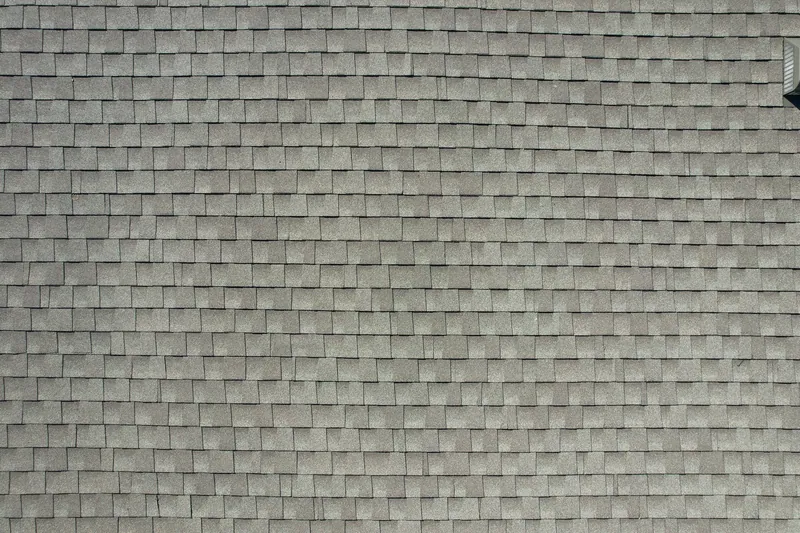
Hail impact on asphalt shingles creates circular bruise marks where the granule coating is knocked loose, exposing the dark asphalt mat beneath. These impact points accelerate UV degradation — the granules are the shingle's sunscreen. Without them, the mat hardens, cracks, and fails significantly faster than its rated lifespan. The damage is real and progressive even when it looks like minor spotting from the ground. Impact-resistant shingles show less visible damage because their polymer-modified mat flexes rather than fractures on impact.
Hail leaves visible dimples and dents in steel, aluminum, and copper roofing panels. While metal roofing is far more durable than asphalt, large hail can damage protective coatings and paint finishes, accelerating corrosion over time. Standing seam metal panels are more resistant than exposed fastener profiles. Any visible denting should be evaluated — dents alone may not compromise watertightness, but coating damage absolutely warrants documentation for an insurance claim.
Hail impact on flat commercial roofing systems (TPO, EPDM, PVC) can cause punctures, splits at seams, and membrane compression damage that isn't visible on the surface but allows water infiltration. Ballasted systems (gravel-covered EPDM) are more resistant — the gravel absorbs impact. Fully-adhered or mechanically-attached membranes are more vulnerable. After any hail event affecting a commercial building, a professional membrane inspection is the only reliable way to rule out damage.
These components are often the clearest early indicators of a significant hail event. Gutters and downspouts dent visibly from hail that also damaged shingles — if your gutters are dented, your roof almost certainly is too. Aluminum siding, painted wood fascia, window screens, and AC condenser fins all bear hail marks. A thorough insurance claim should document all exterior components, not just the roof. Tucci Roofing Co. inspects everything as part of our free storm damage estimate.
Many homeowners assume that if their roof isn't actively leaking, there's no rush to address hail damage. This is one of the most expensive assumptions a homeowner can make. Here's what actually happens when hail damage goes uninspected:
Asphalt shingles are designed to last 25–30 years. That lifespan assumes the granule coating remains largely intact. When hail displaces granules, the asphalt mat is directly exposed to UV radiation. A shingle that had 20 years of useful life remaining can lose a decade or more of that lifespan in the years following a significant hail event. The degradation is invisible at first — and then, suddenly, you have leaks.
Kansas City doesn't get one storm per year. A compromised roof — with fractured shingles, lifted edges, or damaged flashing — is far more vulnerable to the next hail or wind event. What might have been a straightforward insurance claim becomes a complicated mix of pre-existing damage and new damage, which complicates your coverage.
Insurance adjusters and courts recognize that hail damage evidence degrades. Granule loss from the specific storm gets harder to differentiate from normal wear. Weather records still exist, but physical evidence on the shingles deteriorates. Filing promptly — within weeks of the storm — gives you the strongest possible documentation of the damage and its direct connection to the storm date.
Most homeowners insurance policies in Missouri and Kansas allow 1–2 years from the date of the storm to file a claim. That feels like a long time, but between gathering documentation, scheduling inspections, and working through the claims process, that window passes faster than expected. And insurers are not required to accept claims that arrive late.
The right time to call: Within days of the storm, not weeks. Tucci Roofing Co. provides free estimates throughout the Kansas City metro. We'll tell you exactly what we find, document it properly, and advise on next steps — with no pressure and no obligation.
A free estimate from Tucci Roofing Co. is thorough, documented, and honest. We find what's there and tell you exactly what it means.
We confirm your area was in the storm path and note the date. Tying damage to a specific storm event is essential for a successful insurance claim.
We inspect gutters, downspouts, AC condenser fins, window screens, siding, and fascia from the ground. Visible dents here confirm significant hail impact on the roof above.
We walk every plane of the roof, inspecting shingles for circular bruise marks, granule displacement, fractures, and exposed mat. We check the ridge cap, valleys, and all field areas.
All metal flashing around chimneys, skylights, vents, and edges is inspected. Hail frequently damages these components even when surrounding shingles appear intact.
Every impact point is photographed close-up and in context. We note hail density (impacts per square), severity, and pattern. You receive a full copy of all documentation.
We give you a written summary of findings: what was damaged, the extent, and whether repair, partial replacement, or full replacement is the right call. No pressure — just facts.
Hail is a covered peril under virtually every standard homeowners insurance policy in Missouri and Kansas. What your insurer pays for hail damage depends on your policy and your deductible.
The claims process has several steps, and how you navigate them makes a significant difference in the outcome. The single most important thing you can do: get a professional inspection and damage documentation before you contact your insurer. Going in with documented evidence puts you in a far stronger position than calling first and asking for an adjuster.
For a complete walkthrough of the insurance claims process — including how to handle adjusters, what ACV vs. RCV policies mean for your payout, and what to do if your claim is denied — see our dedicated Insurance Claims Guide.
Storm chasers disappear when the season ends. We don't. That's the difference.
We work with leading manufacturers to offer products that carry manufacturer warranties and perform well in the Kansas City climate. During your estimate, we walk you through the best options for your budget.
Most hail damage is not visible from the ground. From outside, check for dented gutters and downspouts, dimples in metal vents or AC units, cracked or missing shingles, and large amounts of granules washing out of downspouts. But the definitive assessment requires a professional up close on the roof, looking for circular bruise marks, exposed mat beneath displaced granules, and fractured shingles. Tucci Roofing Co. provides free hail damage estimates throughout Kansas City — we'll tell you exactly what we find.
Hail one inch in diameter (quarter-sized) or larger is generally the threshold for meaningful roof damage, though this depends on the age and condition of the roof. Older shingles with depleted granules can sustain functional damage from smaller hail. Quarter-sized hail typically causes granule displacement and bruising. Golf ball-sized hail (1.75 inches) causes significant structural damage — cracked shingles, exposed mat, and potential decking damage. Baseball-sized hail (2.75 inches) causes catastrophic damage requiring full replacement.
In most cases, yes. Hail is a covered peril under standard homeowners insurance policies. What your insurer pays for hail damage depends on your policy and your deductible. The key is documenting the damage promptly and linking it to a specific storm event. Tucci Roofing Co. can inspect your roof and document the damage with dated photos and measurements in a written report you can give your insurer.
Not necessarily. Hail damage to asphalt shingles often looks minor from the ground but is functionally serious. When hail strikes a shingle, it displaces the granule coating that protects the asphalt mat underneath from UV radiation. Without granules, the mat degrades rapidly — often within 2–5 years. The shingle may look intact from 30 feet away but be well on its way to failure. This is exactly why a close-up professional inspection matters after any significant hail event.
Most homeowners insurance policies allow 1–2 years from the date of the storm event to file a claim, though this varies by carrier and state. Missouri and Kansas both have specific regulations that may affect your timeline. Don't wait — the longer you delay, the harder it becomes to link the damage to a specific storm. Call us right after any hail event for a free estimate while the evidence is fresh.
Our process: (1) Free estimate — we examine the full roof surface, gutters, flashing, vents, and siding for hail impacts and document everything with photos and measurements. (2) We provide you with a written damage report. (3) If you file an insurance claim: Share the report with your adjuster so they can see all of it. (4) Once approved, we complete the repair or full replacement using quality materials. (5) We perform a final walkthrough with you.
Yes. A hail event that damages your roof almost certainly also affected your gutters, downspouts, siding, window screens, AC condenser fins, skylights, and any painted wood surfaces. A thorough inspection should cover all exterior components. Insurance claims can include all storm-damaged items, not just the roof. When we inspect, we document the full exterior.
After major hail events, out-of-state 'storm chasers' flood KC neighborhoods going door to door. Red flags: pressure tactics, asking you to sign anything at the first visit, contractors you can't find a local address or reviews for. Choose a local contractor with a verifiable track record in Kansas City. Tucci Roofing Co. is based in Lee's Summit, and we'll be here after the work is done.
We respond across the full Kansas City metro — both the Missouri and Kansas sides. After major hail events, we prioritize the hardest-hit neighborhoods and schedule inspections as soon as we can.
Most hail damage is invisible until it's a serious problem. A free estimate from Tucci Roofing Co. takes less than an hour and could save you thousands in preventable repairs.